
Guide
8 things to know before you buy solar in Western New York
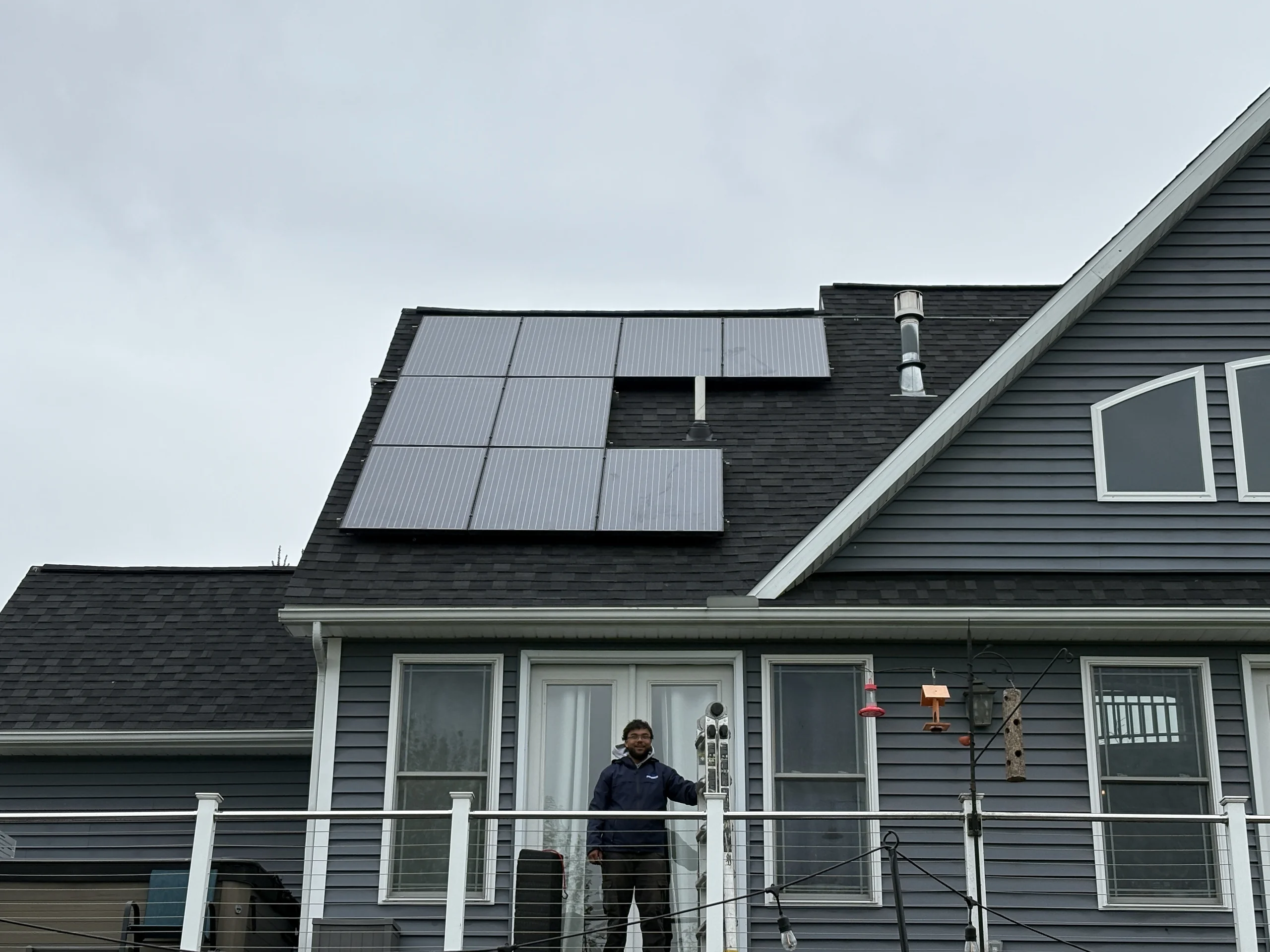
A beginner guide to help you understand: how solar works, what it costs, 2026 incentives, and choosing an installer.
If you’re new to VSG, Solar, and all things with renewable energy. Welcome!
If you’re familiar with some of this stuff, I hope to offer some additional important things. But most importantly, I’d like to start by saying PLEASE DO NOT start by comparing solar panel brands. That’s not a good way to start in your research.
You might ask, “what should I start with then??”
I’m going to share with you what I think everyone should know about buying solar in 2026 based on (1) my personal experience shopping from different companies for solar, (2) working in the renewable energy industry for 3 years, and (3) based on my own day-to-day experience working at a local company that specializes in solar and battery installation and maintenance.
Here’s my opinion:
Buying solar is less about the panels on your roof and more about picking the right company. Instead of worrying about the cost or the brand of the equipment, focus on finding a good local team that does the work, cares, and has the expertise.
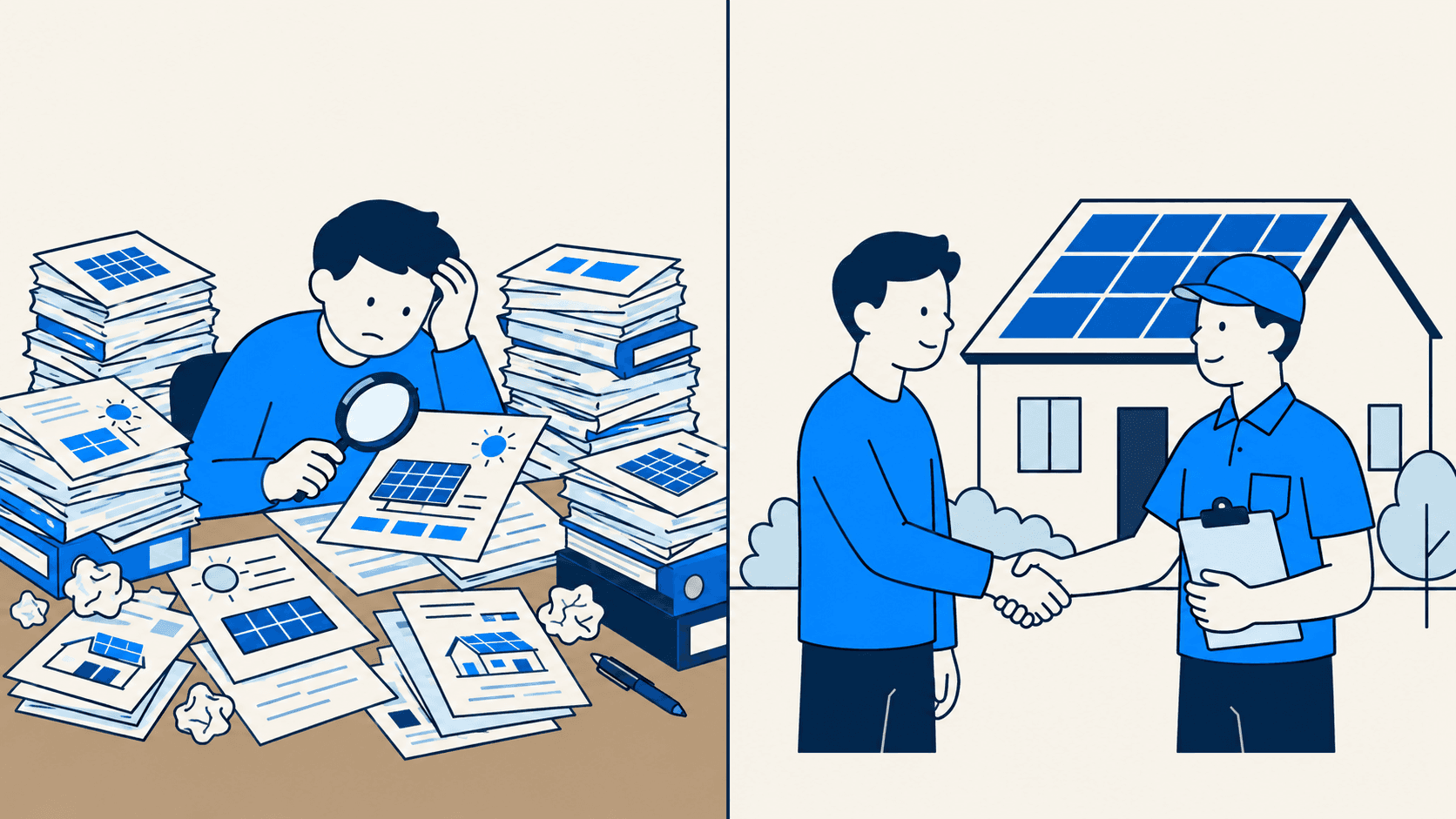
And so if you’re just getting started, here are the only 8 topics you need to understand first so you can make a better shopping decision:
How does Solar work?
Why do people even consider it?
Is my home is a good fit?
What happens to the electricity I produce?
How do I approach Solar Equipment?
What are the 5 ways people pay for solar?
What discounts/incentives are left?
Who do I choose to go solar?
I’ve written this with the thought of how I would explain it to my parents and friends.
My goal here is to give you a simple overview. So when something is more complex and needs a deeper explanation, I’ll point you to another article. Again simple is the goal!
So let’s start!
1. Solar in 60 Seconds (How Solar Works)
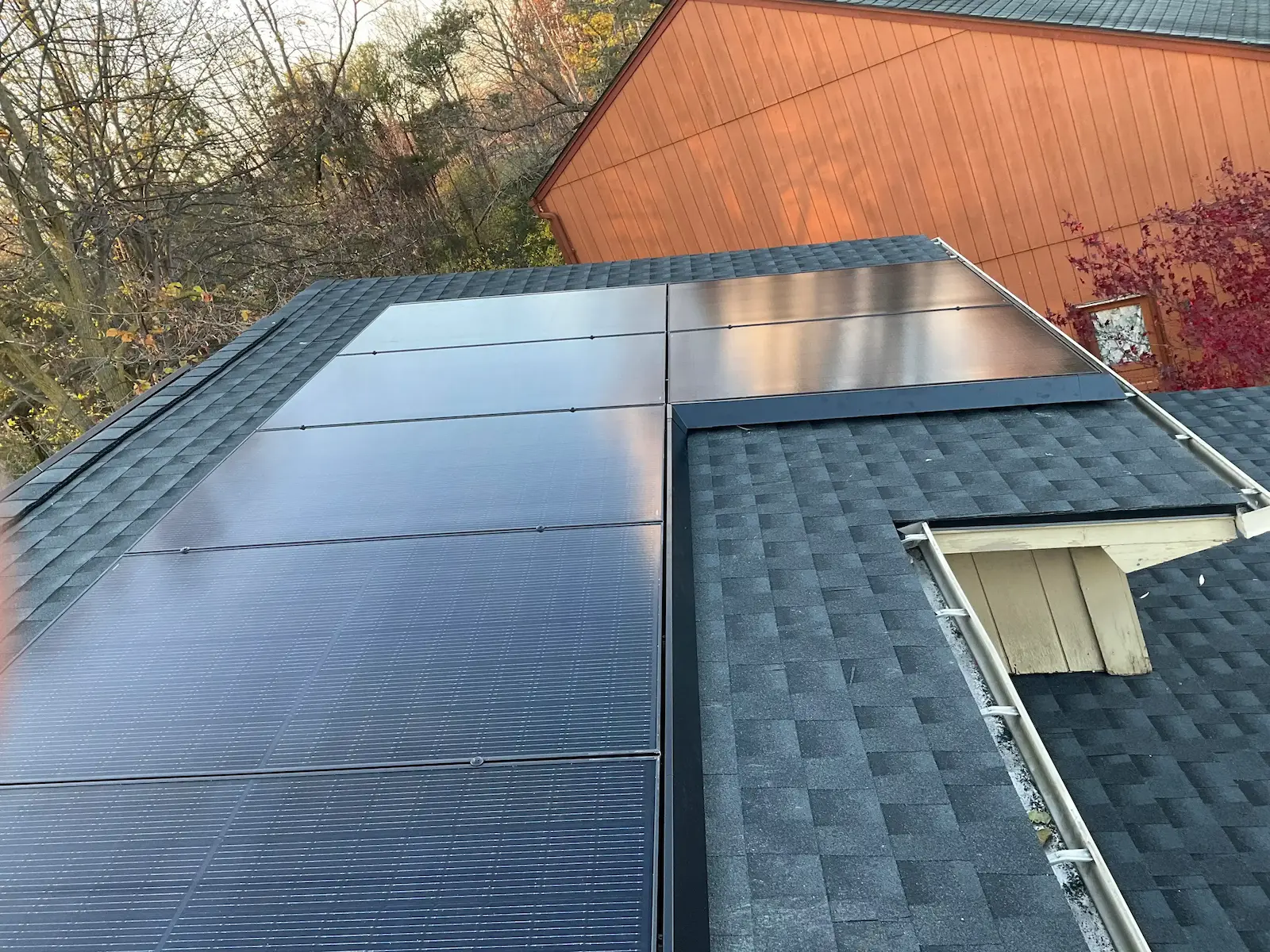
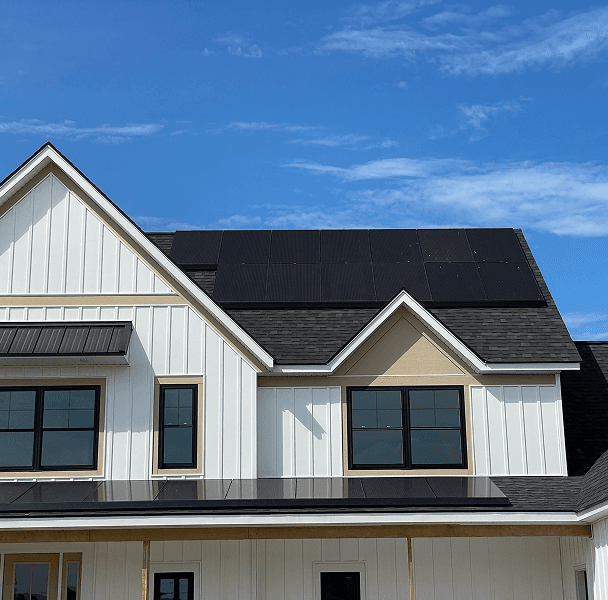
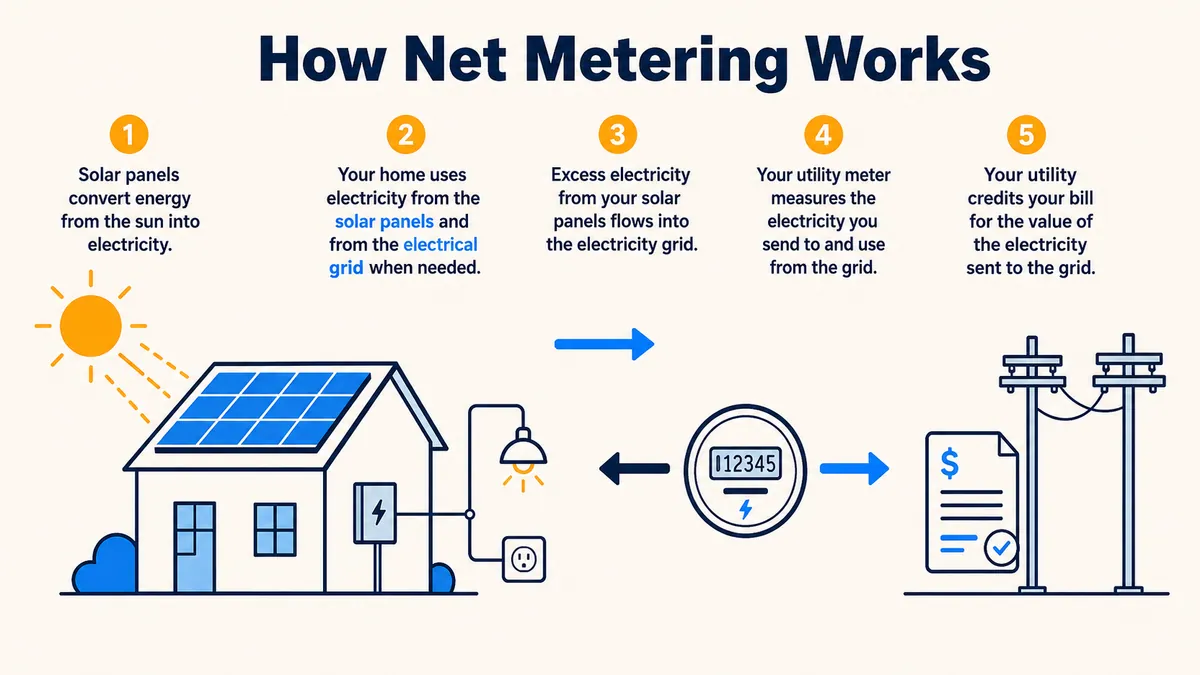
At the simplest level, when sunlight hits solar panels, it turns into electricity your home can use.
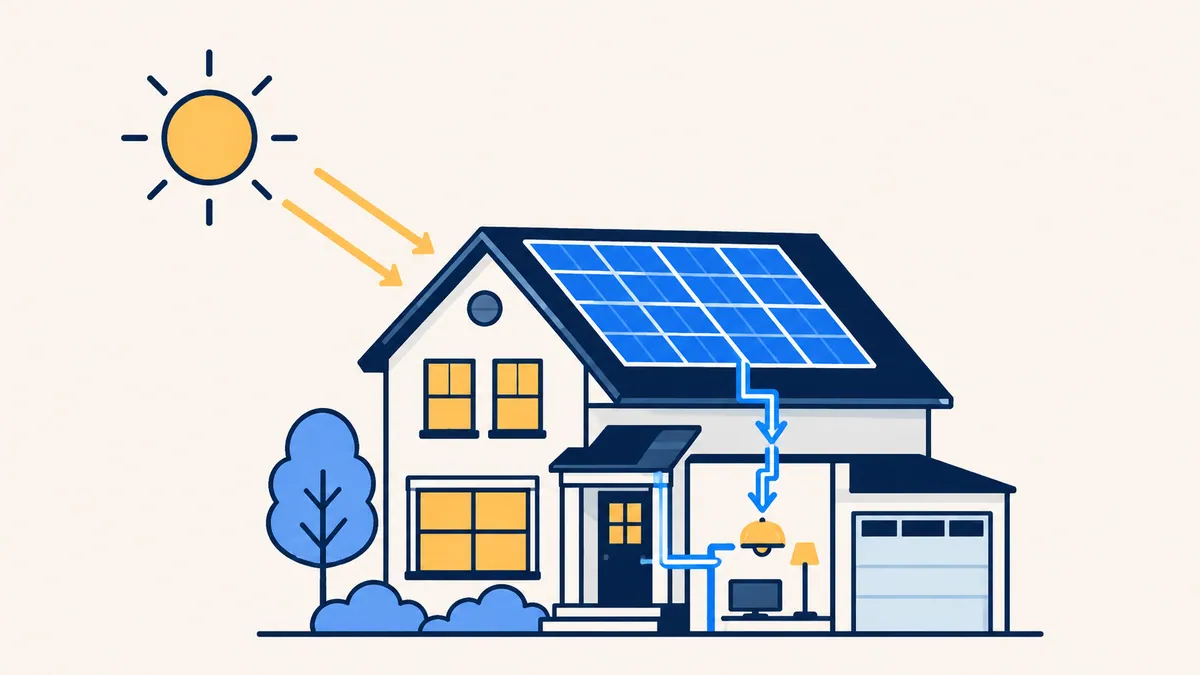
The solar panel system connects to your home’s electrical panel, so when the panels are producing electricity, your house can use that power. When your home isn’t using it, it sends the excess back to the grid, and you’re credited like points.
3 important things people get mis-informed about
If your system makes more power than you’re using, the extra goes to the grid, and you earn credits through net metering. (More on this later)
When your panels aren’t producing power, your home draws power from the grid, so you’re not off-grid, and you won’t lose power.
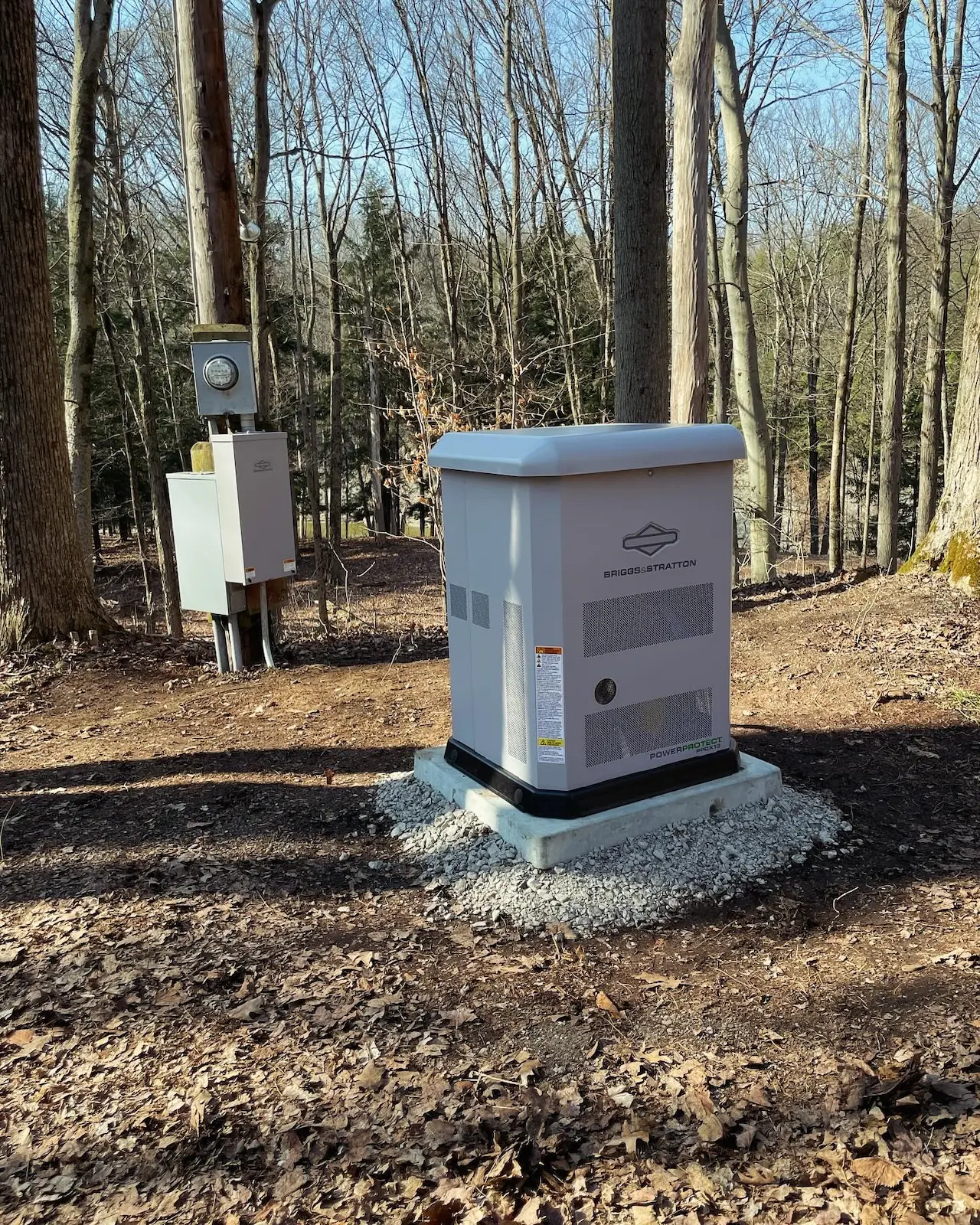
And lastly, Solar Panels are not backup generators. If there are power outages and you only have solar panels, it won’t be enough.
And that’s really the basic idea. Solar panels are just smart rocks sitting in the sun and making electricity for decades.
There’s obviously more science behind it, but this guide is about simplicity, not science.
Here will be a link to learn more about how the science works!
Coming soon
How Home Solar Actually Works
2. Why Do Homeowners Even Consider Solar?
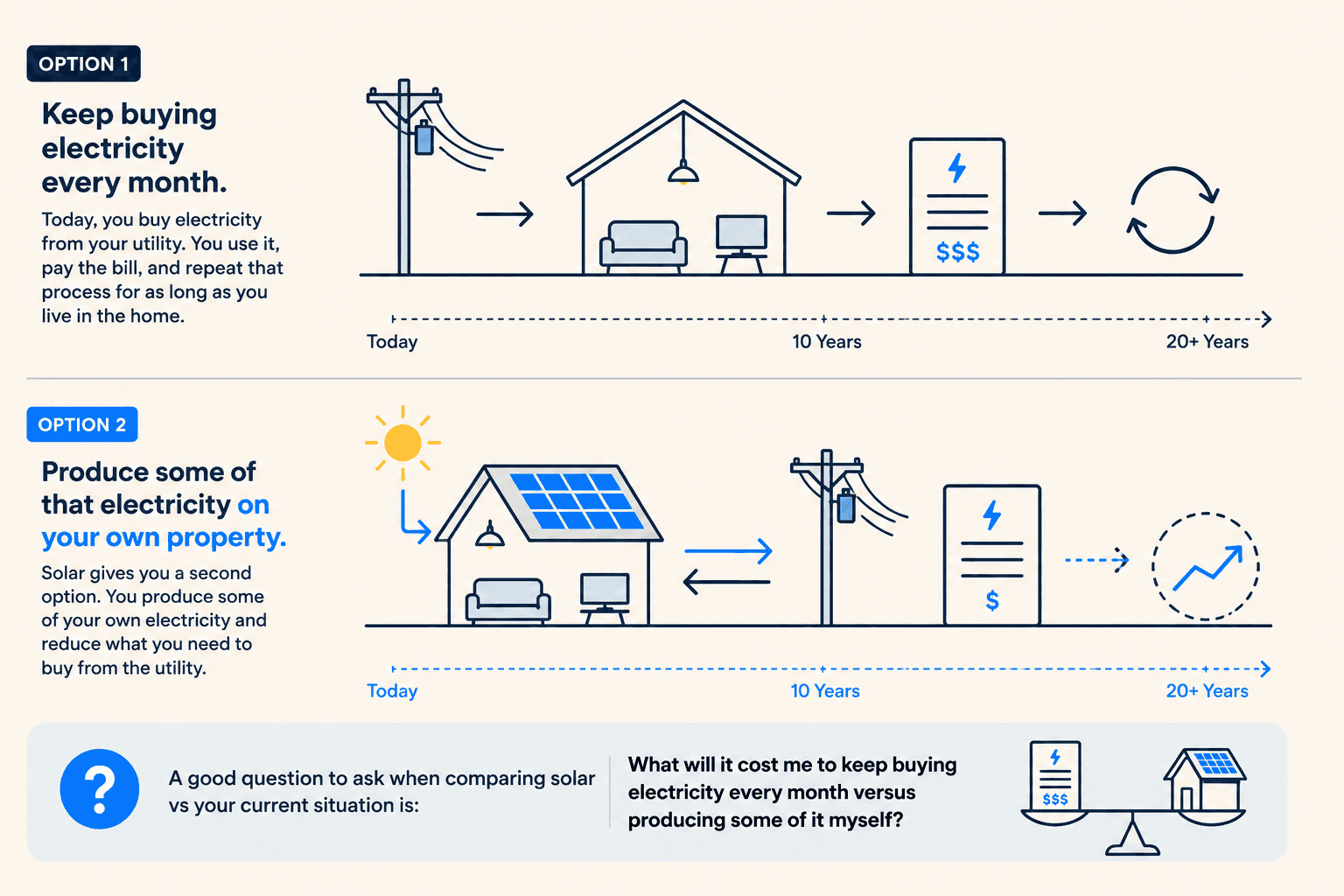
Solar is ultimately competing with your electric bill.
Today, you buy electricity from your utility every month. You use it, pay the bill, and repeat that process for as long as you live in the home.
Solar gives you 2nd option.
Produce some of that electricity on your own property.
That becomes more interesting when electricity costs change over time.
Nobody knows exactly what rates will look like 10 or 20 years from now, but we can definitely approximate why and how electric costs and rates will go up.
But a good question to ask when comparing solar vs your current situation is:
What will it cost me to keep buying electricity every month versus producing some of it myself?
Coming soon
Is Solar Worth It in Western New York?
3. Is Your Home Actually Good for Solar? (Whether your property is a good fit)
Most houses aren’t optimized for solar, but that doesn’t mean it’s bad. You can get a quick idea of whether your home is good based on these 4 things.

1. Sunlight
Shade from trees, clouds, and things on your roof all reduce how much electricity your system produces. A little shade isn’t necessarily a problem. But a roof under large trees for most of the day is a different situation.
But if you can look outside during the morning, noon, afternoon, and evening and still see light hitting your roof. This is a good sign you have potential!
2. Roof direction
Because of the Earth’s rotation and tilts, the sun will hit the solar panels for different numbers of hours throughout the year.
Roof facing directions in Western New York:
Roof faces | Sun exposure |
|---|---|
South | 100% sun exposure |
East & West | 85-90% sun exposure |
North | 60-75% sun exposure |
South-facing roofs are great, but east- and west-facing roofs work well too. But rather than obsessing over direction, I think these are just good indicators. What matters is:
How much electricity will the whole system realistically produce over a year?
3. Roof age/condition
Solar can stay on your roof for 30+ years. If your roof needs replacement soon, it usually makes sense to address that before or alongside the solar installation.
4. Usable space
Chimneys, vents, dormers, shade, and roof shape can all reduce how much usable space you have.
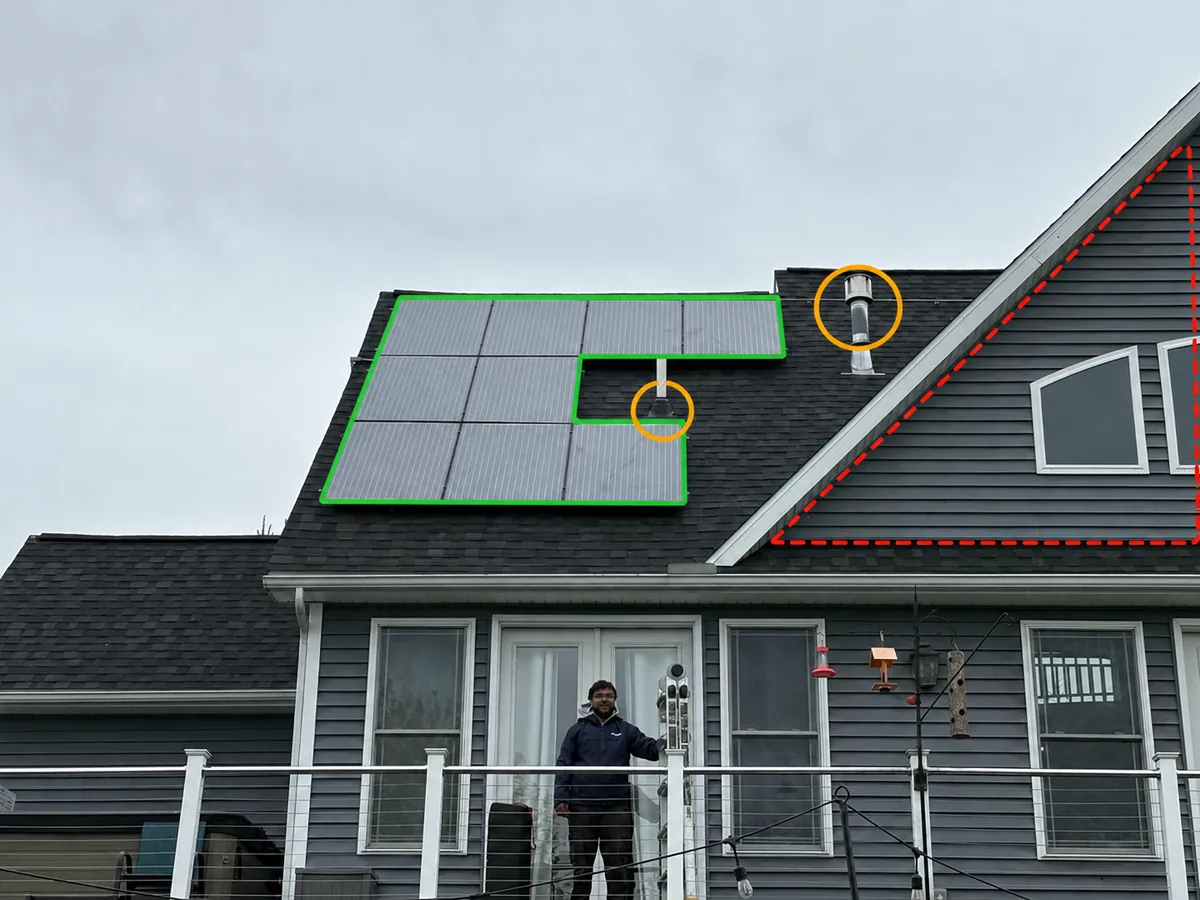
What if the roof isn’t a good fit?
If you have enough land, a ground-mounted system may be another option.
Ground mounts give an installer more control over orientation, angle, and system size, but normally cost more because of the additional structure, trenching, and electrical work.
Sometimes I’d rather see a good ground mount than force solar onto a bad roof.
Coming soon
Is My Home Good for Solar?
Coming soon
Rooftop vs. Ground-Mounted Solar
4. What Happens to the Electricity You Produce?
Your solar panels produce electricity from the morning until late afternoon/night.
You and your family use electricity all day and night. So those two things don’t always line up perfectly.
Here are 2 scenarios:
In the morning, you wake up at 7:00 am, turn on the lights, toaster, oven, and hair dryer, eat breakfast, and get ready to go to work. You just used electricity when your solar panels weren’t producing electricity.
Now, from 9 a.m. to 5 p.m., no one is home, but your solar panels are producing electricity.
So what happens to the power you produce??
When your solar system produces electricity and you don’t use it, that extra power goes back onto the grid. Then you will get credit for that power.
Now, at night, because there is no power from the solar panels, you use electricity from the grid, and the credit that you produced during the day is now being used for that.
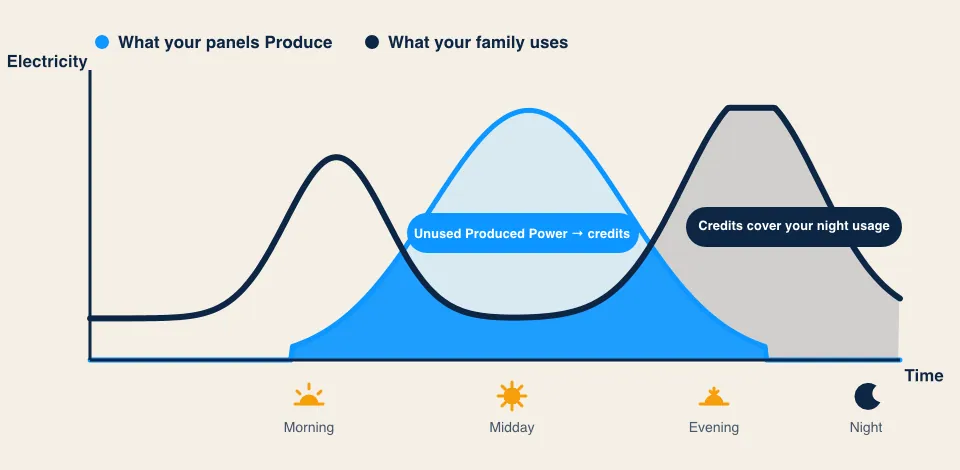
So at the end of the month, you’re not paying extra as long as what you produced = what you used
To summarize it:
The utility will give you a credit for any extra power you produce, and you use the credit when you’re not producing power, instead of being billed for it.
You don’t need to become an expert in utility policy. But before buying, this is a must-understand, and it’s unfortunate how many people we have met who didn’t get this explained.
Coming soon
How Net Metering Works in New York
5. Don’t Obsess Over the Solar Panels (How to approach Solar Equipment)
This is where homeowners can waste a lot of time.
One panel is 430 watts. Another is 440.
Another salesperson says theirs is 450.
One is 22.1% efficient, and another is 22.5%.
Eventually you’re comparing decimal points without knowing whether any of it actually matters. For someone starting their solar research, I wouldn’t begin by trying to find the “best” panel.
Especially in the current political environment, understand every solar installer’s reasons for their product selection, because you will be surprised by the nuances.
Most solar projects also use very similar, quality brands, and modern solar panels are relatively similar in what they produce.
But there absolutely are differences.
The likelihood that you run into a project that is using a completely different panel or something that’s super different from your other quotes is small. But remember, doesn’t mean you shouldn’t ask about it.
Just don’t assume a 450-watt panel is automatically better than a 430-watt panel.
Wattage by itself isn’t a quality score.
We have a deeper dive into how to evaluate panels and their qualities.
Coming soon
Solar Panels and Inverters: What Actually Matters?
6. The 5 different ways to buy solar panels. (How people pay for solar)
So depending on your local solar providers, you may see all of these options or just a few of these. There are only 5 ways for homeowners to pay for a solar panel system, and the equipment on the home may look similar.
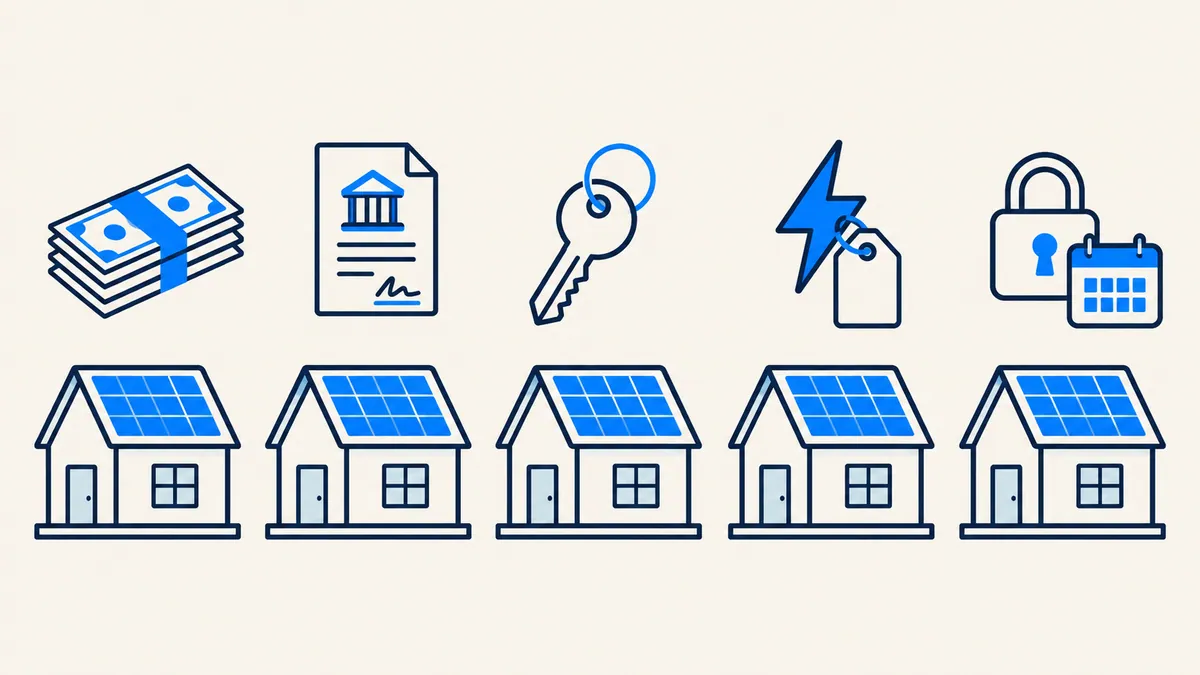
However, things like who owns the system, what you pay over time, how incentives are handled, and what happens when you sell the house can all change depending on the structure.
Here are the 5 different types of structures that you should be aware of:
Structure | Who owns it | Who claims the incentive | What it means |
|---|---|---|---|
Upfront Cash Purchase | You | You | Purchasing the panels upfront offers the highest return on investment with no new debt. But you spend the most. |
Financing | You | You | Best for cash flow and allows you to spread 1 large costs across multiple years. |
Lease | The company | The company | You are renting the solar panels. It’s like paying your electric bill, but to a company that owns your solar panels. |
Power Purchase Agreement (PPA) | The company | The company | Similar to a lease, but you are paying for the power produced at a certain rate. (Explained in our deep dive guide) |
Pre-paid Third Party Owned | The company | You | Similar to the lease/PPA, but you prepay a large sum, and you can capture the 30% tax credit. Very complex, but can be similar to purchasing solar. |
This can get really complex in terms of understanding and modeling. But we’re going to have a guide to help you understand it.
Coming soon
Cash vs. Loan vs. Lease vs. Third-Party-Owned Solar
7. Solar Incentives to be aware of right now
Solar incentives can reduce the effective cost of a project, but they change over time, and eligibility depends on the specific homeowner and project.
That’s especially worth paying attention to in 2026 because the incentive landscape has changed.
Here is what we have left:
Incentive | Status | What it means |
|---|---|---|
New York State Solar Tax Credit | Active | 25% of qualified solar expenditures, up to a $5,000 maximum credit |
NY-Sun Megawatt-Block Program | Closed | We are Participating Contractors in other electrical programs |
Federal 30% Residential Clean Energy Credit | Closed | Expired after December 31, 2025 for normal cash/financed purchases |
1. New York State Solar Tax Credit - Active
New York currently offers a residential solar income-tax credit equal to 25% of qualified solar expenditures, up to $5,000. So if the total project costs is $20,000.
Worked example
$20,000 x 25% = $5,000
You’ve hit the maximum credit.
But remember, a tax credit isn’t necessarily the same thing as someone giving you $5,000 in cash after installation.
Your individual tax situation matters. If you’re relying heavily on the incentive to justify the project, talk to a tax professional.
2. NY-SUN Megawatt-Block Program - Closed
New York also has solar programs through NYSERDA and participating contractors.
Depending on the property, location, income qualifications, program availability, and project type, additional incentives may exist. But as of right now, there is no funding for MW-Block Incentives.
Even though the NY SUN MW Block Program is closed, we are Participating Contractors in other electrical programs like the Appliance Upgrade Program by NYSERDA, helping homes get grants on electric panel and service upgrades!
But, we will continue to update this following page with NYS incentives and tax credits.
What About the Federal 30% Solar Tax Credit? - Closed
If you get a Solar Lease or Prepaid Third Party Owned solar system, they still have the 30% tax credit.
We’ll have more about this in our Solar Incentives & Tax Credits Guide!
Coming soon
2026 New York Solar Incentives & Tax Credits
8. The Installer Matters More Than People Realize
(Who you’re trusting to install and service it)
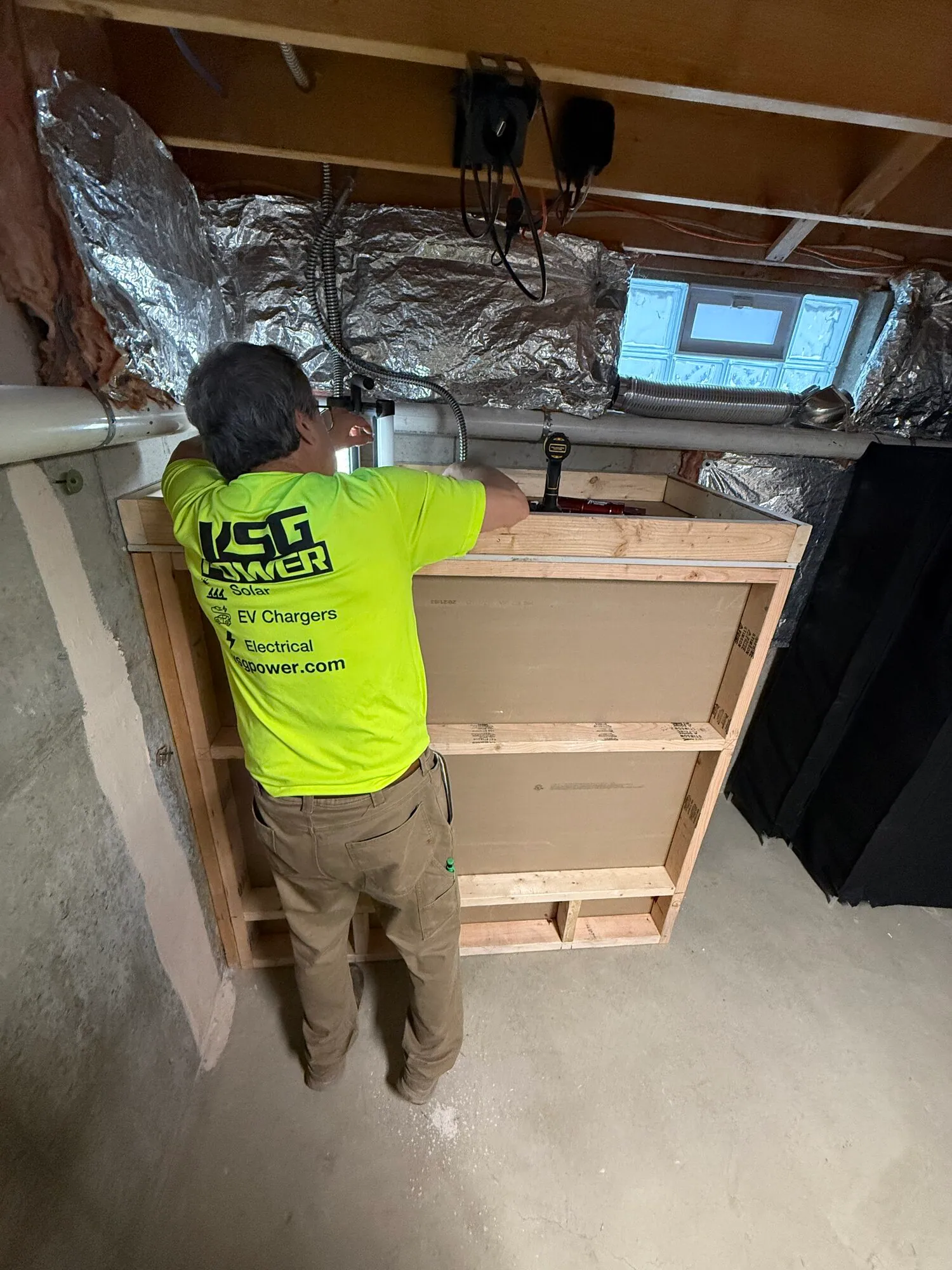
Solar is supposed to stay on your property for decades. So you’re not only choosing panels.
The truth is, this industry is historically known to have fly by night, short term, and dishonest solar companies.
These temporary or national businesses use big sales teams to sell solar and without proper oversight make false promises. Then when those system breaks down a few years later, they are gone and cannot help service the system, and people are left angry with their poor investment. Even though it may have been a simple warrantied equipment replacement part. This is what has left a blackeye on our local solar companies and people that actually care about this industry.
So you want to know that the solar provider you are going with has a track record by their team, their years in industry, their values, and that they will actually respond to you.
Reading reviews about the sales process are useful. But finding reviews about service and warranty calls are even more useful.
This is why, I’d spend less time looking at different panels and equipment, and more time reading up on whether the company has real, credible proof that they plan on staying here and in this industry.
Coming soon
How to Choose a Solar Installer
So, What’s next?
Well if you read all the way to the end, looks like you really are interested.
And I hope that was helpful.
Now if you’re wondering what should I do now?
I put down an easy 4 question checklist to evaluate yourself if this is worth continuing to read on about, and some next steps if you feel ready to start shopping!
“Is solar worth it to consider” Checklist
Are we spending more than $100 a month on electricity?
Does our roof or property get good sunlight throughout the day?
Are we planning to stay here for more than 5 years?
Do we have the cash or credit score to afford this?
If YES to most of those, solar is worth investigating.
And if you’re ready to start shopping, this is what I’d recommend to find an ideal solar installer.
Reach out to 2-3 local solar companies.
Schedule calls to learn more about them and their proposals.
Don’t go in pretending like you know everything.
Let them teach you. I’d highly recommend having the Salesperson explain it to you, even if you already know everything. It’s going to feel long and boring at times. But this is how you can see what their company focuses on and values.Reflect on the patience, articulation, and guidance you experienced from the sales rep.
Don’t compare only on prices. Read their recent written reviews and how the business focuses on being here long term.
Once you went through all of this, evaluate whether this is right for you and your goals!
And if you ever want a 2nd opinion, feel free to reach out to us!
One Last Note
This guide was made to be as simple and comprehensive as possible. So there are things in here, i felt like would be more advanced and would fit another guide. I know what its like to make a big financial decision, and it’s always comforting to know you have the right people in your corner. So if you ever have any questions, feel free to reach out for help!